What the difference between Woven and Knit Fabric?
If you’re making apparel, underwear or shapewear design, or working as a fabric buyer, you will keep running into these terms: Knit, Woven, Warp Knit, Weft Knit, tricot, jersey, interlock and more. When you’re new to this field, these terms will easily confuse you, and you won’t know what they mean and how they differ. Today we will break down what these fabrics are and where their differences lie.
I. Woven Fabric & Knit Fabric
Woven
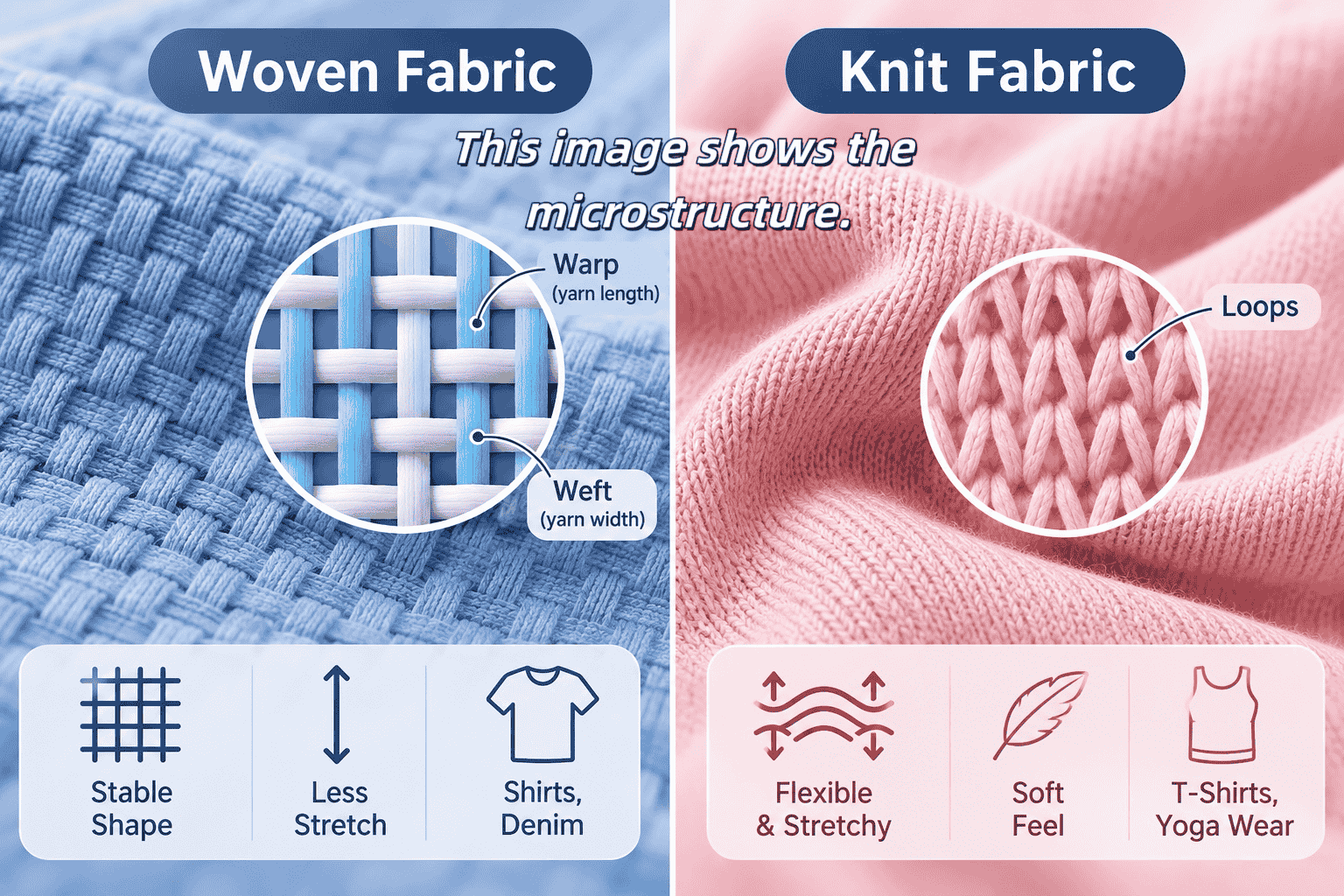
Woven fabric uses two sets of yarns crossing perpendicular to each other, just like weaving a basket. One set runs along the length of the fabric — warp yarns; the other set runs across the fabric width — weft yarns. They weave over and under one another.
Features: The yarns lock each other firmly. The fabric holds its shape well and does not stretch or deform easily. It barely has natural stretch. If elasticity is needed, you have to add spandex separately. Common products: shirts, suits, denim, trench coat fabrics.
Knit Fabric
Knit fabric does not rely on the cross interlacing of warp and weft yarns. Instead, it bends yarn into loops, and these loops interlock with each other to form a whole piece of fabric. The working principle is exactly the same as knitting a sweater by hand.
Features: Knit fabric is made of connected loops. The loop structure can flex and stretch freely. When you pull the fabric, the loops deform and bounce back, giving knit fabric built-in elasticity. Still, the actual stretch depends on loop structure, stitch density and whether spandex is added. Common products: T-shirts, yoga pants, underwear, shapewear.
Some people may wonder why knit fabric with the same raw yarn costs more than woven fabric. The reason is simple: its structure is more complicated. Knitting machines are more precise and expensive, which pushes up the price of finished knit fabric.
II. Warp Knit VS Weft Knit
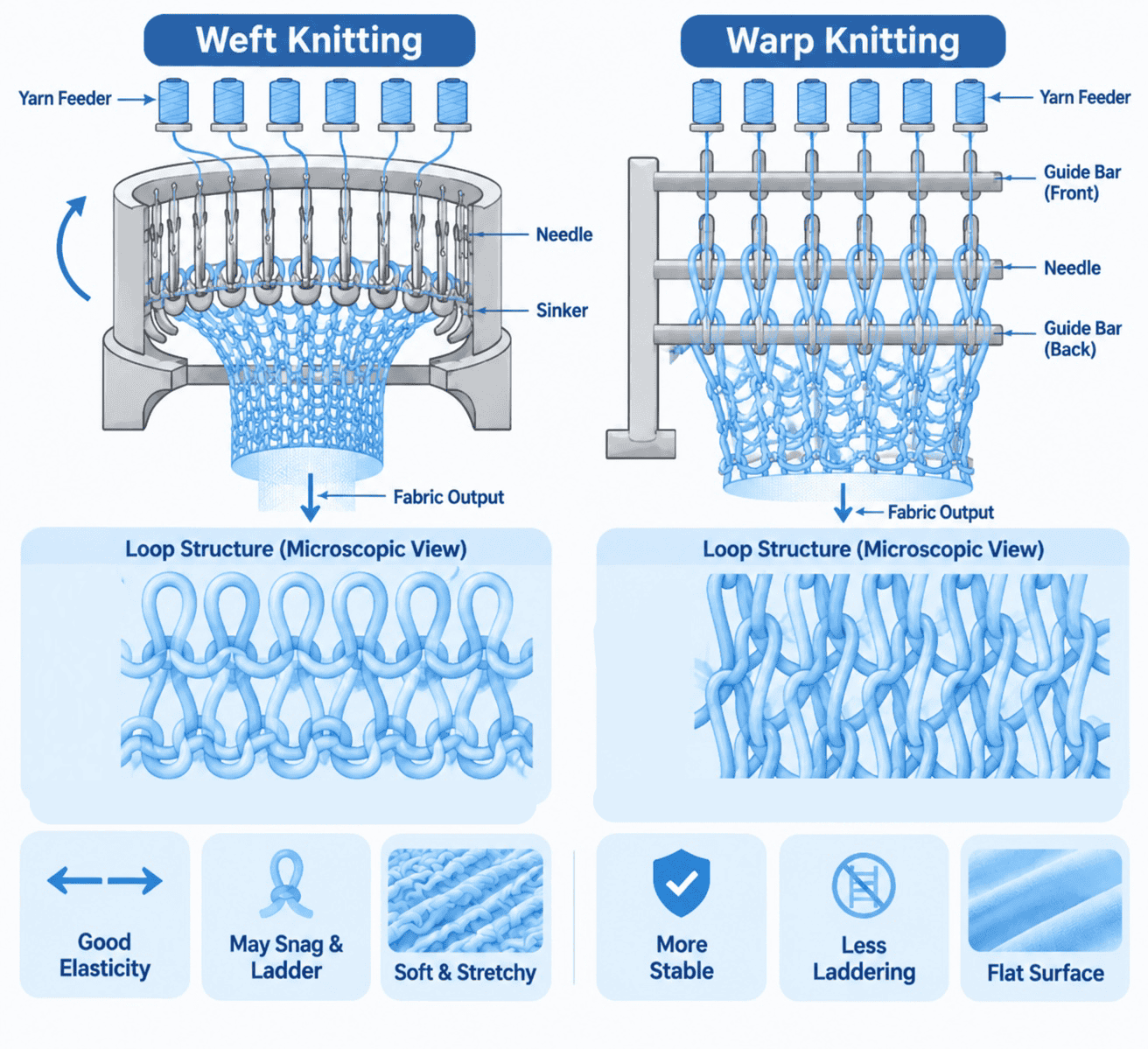
As we just mentioned, all knit fabrics are made by bending yarn into connected loops. Even if two fabrics are both knit, different loop shapes and different ways the loops connect will result in totally different handfeel, stretch and performance. Knit fabrics are split into two major types: Warp Knit and Weft Knit.
Weft Knit
Yarn runs along the width of the fabric, forming a full horizontal row of loops. Each row of loops interlocks with the row before it and layer by layer.
Advantages: Great horizontal stretch, soft handfeel. Disadvantages: Loops connect one after another. Once the fabric gets snagged, the stitches will ladder and unravel continuously.
This is a good spot to clarify: What are Single Jersey and Interlock?
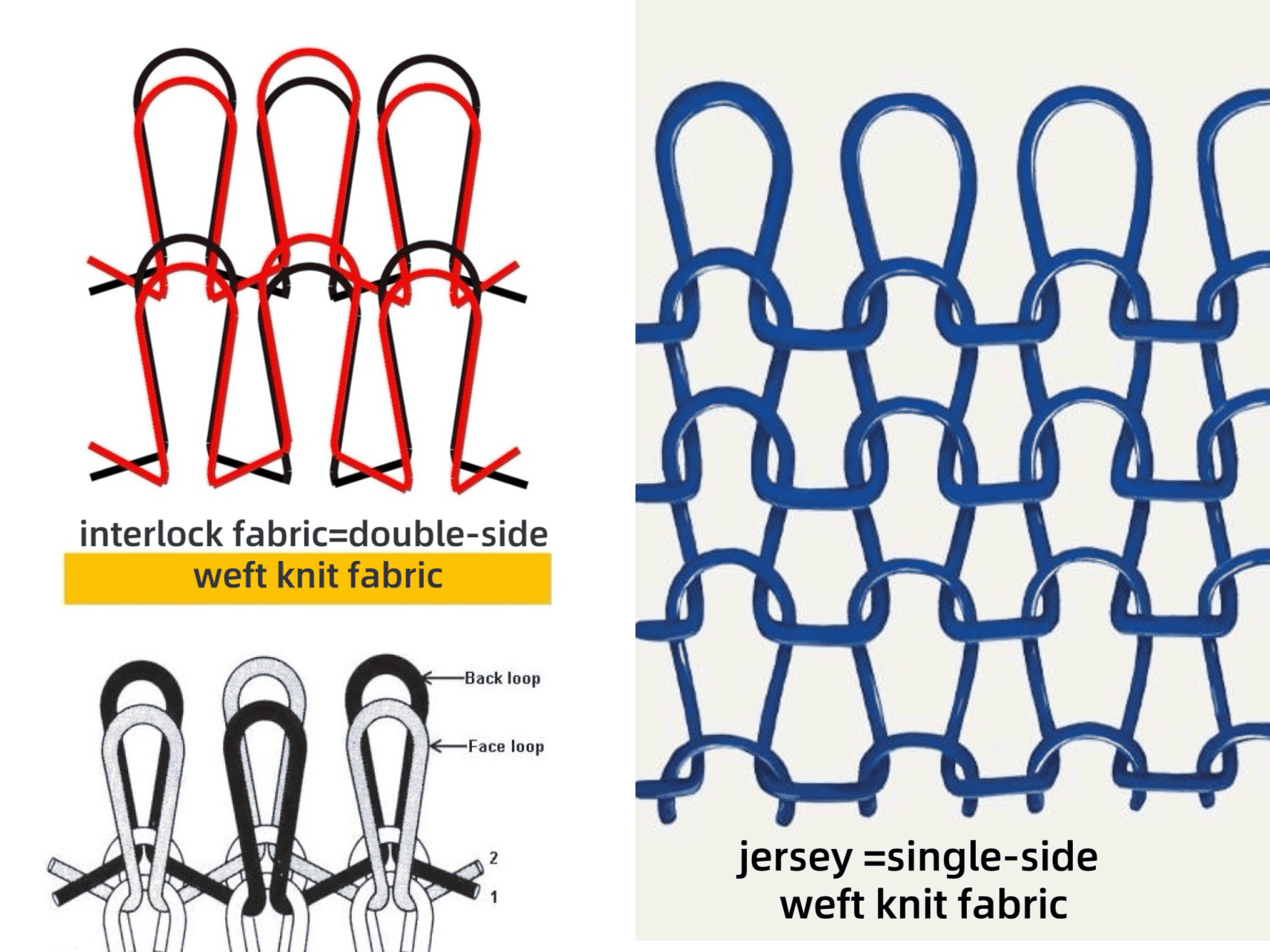
- Single Jersey fabric is single-face weft knit fabric. Loops only show on one side. It feels smooth, and the reverse side looks different. It has nice horizontal stretch, but it tends to curl at edges. Snags will cause laddering.
Application: lightweight summer underwear fabric, regular t-shirt fabric. - Interlock It is double-faced weft knit fabric. Two single-jersey structures are interlocked together during knitting. Think of two sets of single-jersey loops knitted back-to-back as one unified fabric(rather than two separate fabric pieces joined afterward). The fabric surface is flat and thick, both sides look identical. It has balanced stretch, strong support and hardly curls at edges.
Application: shapewear, Fajas compression garment fabric.
Warp Knit
Multiple yarns feed into knit machine at the same time,running along the fabric length.Each yarn makes its own separate column of loops, knitting side by side. It is NOT one single yarn running horizontally across the fabric.
Advantages: Multiple yarns restrain each other. The fabric will almost never ladder over a large area. It has smooth surface and stable dimensions.
But its knitting process is more complex. Warp knitting machines usually cost 3 to 5 times more than weft knitting machines, so warp knit fabric is more expensive than weft knit.
Application:It fits swimwear, lingerie and fine elastic mesh fabric.
III. What is Tricot? Its relationship with Warp Knit
Warp Knit is the big category, and Tricot is one type under warp knit, produced on tricot warp knitting machines. These two terms are not interchangeable; it is a parent-category and sub-type relationship. Do not treat tricot as just another name for warp knit. Warp knit covers multiple knitting types besides tricot, and Raschel is another common warp knit type.
- Tricot: smooth fabric surface, fine dense elastic fabric, lightweight. Widely used for close-skin fabrics of underwear and shapewear.
- Raschel: also belongs to warp knit family. Raschel warp knitting machines can make large mesh, lace and hollow-out lace with more complex patterns and structures.
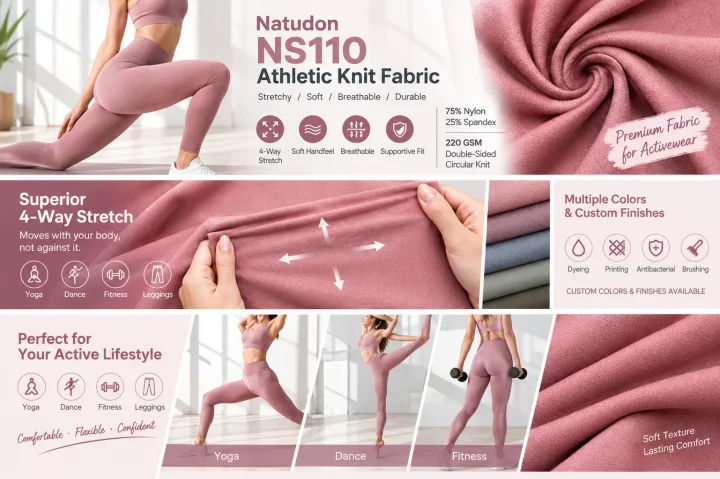
See Natudon nylon spandex interlock yoga leggings fabric same hand feel as lululemon