What problems can our innovative textiles—bamboo power mesh fabric solve for you?
Polyester mesh fabric, Nylon mesh fabric, Bamboo viscose fabric, these over‑flooded mesh fabrics are everywhere on the market. And your customers, just like you, have been fed up with these garments made from these ubiquitous, homogenized fabrics for a long time.
Selling these
commonplace items the same way
as your competitor, you can only get stuck in
cut throat price wars. So if you are finding an
exclusive and distinctive fabrics to get rid of this dilemma, look at our innovative textiles :
Natudon Rs002
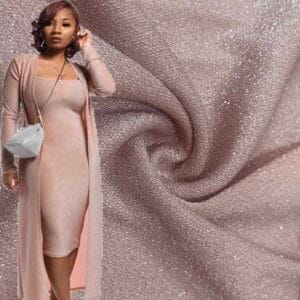
eco friendly bamboo viscose recycle nylon spandex power mesh fabric
48% recycled Nylon: eco friendly differentiated selling points & supportive & durability for lingerie, underwear, yoga tops and sports tanks, preventing garment tearing and shape loss.
21% Spandex: Delivers steady stretch & recovery for intimates, activewear, allows for unrestricted stretch after repeated body movement.
31% Bamboo Fiber: Provides soft, cool touch and breathability for solving scratchy and stuffy mesh discomfort.
application: underwear fabric & activewear fabric & mesh lining & sports tank & yoga top
customization:Available
Open-hole mesh structure:Air flows freely,keeps skin dry in hot weather
Weight:150g:lightweight fabric
Width:59-61 inch (150-155cm)
warp knit:4 way stretch and tear‑resistant
Certification:OEKO&GRS
Sample: Free sample available
Service:24h service,Please feel free to send inquiry
Why are there nearly no fabrics the same as ours on the market?
Because the manufacturing process for this innovative textiles is extremely complicated, not all factories are capable of producing it.
This fabric is not simply a mixture of three fiber types: bamboo viscose, recycle nylon, spandex . Instead, the three fibers have different requirements for dyeing, wet processing, heat treatment and elasticity control. Yet they must achieve a harmonious and stable final result within the same piece of fabric.
1.The first challenge: recycle nylon , bamboo viscose and spandex prefer different environments for dyeing
Nylon requires acidic conditions to be dyed. Bamboo viscose is a natural regenerated cellulose fiber, and its dyeing conditions differ from nylon; it generally needs alkaline conditions for dyeing. And when we add nylon + bamboo viscose + spandex together, there is one more problem. For this reason, we have to readjust the dyes and process parameters.
To put it simply: you cannot just throw all three fibers into the dye vat at once. To use a personified analogy, these three fibers each have their own unique “temperaments”.
You can think of it like this:
Three people are washing clothes together. One needs cold water, one needs warm water, and the third is very sensitive to detergent. If you only cater to one person’s needs, the other two will run into trouble.
As we know, there are inherent difficults that Nylon and spandex take up dye at different speeds and risk losing stretch. Adding bamboo viscose brings conflicting acid‑alkaline dyeing requirements. Regular nylon‑spandex processes won’t work. We have to dye all three fibers evenly while keeping good stretch‑recovery.
So the real and upgrading difficulty is finding a new and specific set of process conditions that suit all three fibers to pruduce bamboo viscose recycle nylon spandex power mesh fabric.
2.The second challenge: when bamboo viscose is wet, it is more likely to be affected by pulling
Bamboo viscose has good moisture absorption, but after it absorbs water, the state of the fiber will change. Compared with its dry state, the fabric becomes more susceptible to pulling and mechanical force when wet.
Therefore, in the process of dyeing, washing, dewatering and drying, it is necessary to pay more attention to tension and handling methods applied to the fabric.
If it is pulled too hard or mechanically processed too hard, it may affect the final size, shape and surface effect of the fabric.
It can be compared to a piece of paper: dry paper is easier to pick up and move; but the paper will become soft after soaking in water.
At this time, if you pull it hard, it will be more likely to deform or even damage. Bamboo viscose fabric has a similar principle in processing.
The difficulty here is not that bamboo viscose absorbs water poorly. On the contrary, its water-absorbing property is its advantage for underwear fabric and sports fabric.
What really needs attention is that pulling and mechanical handling during production must be gentle once the fabric gets wet, otherwise the stability of the finished fabric will suffer.
3.The Third challenge: once made into Fine Power Mesh fabric, all the above issues stack together
This is where the production of this product is really challenging. If you just make ordinary nylon/viscose/spandex blended fabric, the previous problems need to be controlled. But if it is further made into fine power mesh, the requirement is not only “the fabric is dyed well”.
It still needs to be controlled: The size of the mesh hole; Mesh uniformity; Gram weight; Fabric stability; 4 Way stretch; Recovery after stretching; The size after processing; The tensile force of the yarn; Has the mesh structure changed after dyeing?
Therefore, for this kind of fabric, the real challenge is not to solve a problem alone. It is necessary to make: the dyeing of bamboo rayon and the change after encountering with water + the dyeing techinque process of three fibers + the elasticity of spandex + the knitted mesh structure can be balanced in the same production process at the same time.