
Non See Through Legging Fabric: How to Stop Squat Translucency
How to select fabrics that prevent see‑through issues during squats can be a challenging puzzle for many brand buyers, apparel designers and end‑consumers. This is especially true for highly‑stretch products such as yoga pants, compression athletic leggings and fitness apparel. Anti‑see‑through property is not an extra advantage any more; it has become a basic demand that guarantees product safety and brand reputation.
Designers often meet a troublesome problem in actual production; suppliers say their fabric can block light and prevent see‑through, but they never clearly explain the specific conditions for this effect.
Fabric samples look opaque when they are placed flat, but these materials will become see‑through after being made into leggings and pulled under tension.
It is very important for textile materials to keep the same light‑blocking effect when they are stretched as they do in the flat condition.
For buyers, considerations go beyond whether a fabric is see‑through. They must also clarify who bears the costs if fabric defects occur, and how to recover wasted time, capital and damaged business reputation. Sometimes, an apparently low‑cost fabric can end up being the most expensive option for purchasers.
For consumers, paying a premium for leggings only to discover they turn sheer while performing movements at the gym can be deeply embarrassing and socially awkward. Consumers purchase these garments for peace of mind, yet end up constantly worrying about accidental exposure while exercising. Worse still, shoppers may lose trust in the apparel brand. Consumers frequently share product experiences in fitness settings, so one bad experience can trigger far‑reaching ripple effects.
How should we choose fabrics to address these problems?
There is no simple answer such as “pick one specific fabric and it will definitely not be see‑through”. The actual performance is determined by a combination of fiber type, yarn specification, knit construction, fabric weight, dyeing process and finished‑garment pattern. That said, the following fabric types are preferred options:
- Nylon‑spandex blends. This composition delivers high stretch, softness and skin‑friendliness. Nylon filament can be woven into a dense structure, making it ideal for yoga and training pants.
- High‑density nylon‑spandex blends. Emphasis should be placed on “high density” and opacity under tension.
- Double‑face constructions of nylon/polyester blended with spandex. Double‑face structures strike a good balance between coverage, manufacturability and wear comfort.
Material categories that warrant extra caution
Fabrics that are too light and have strong stretchability will lose most of their ability to block light when pulled; these materials do not let light through when they stay still, but they become see‑through when people do squat movements.
Light‑colored fabrics with insufficient size also have this problem; pale colors naturally need stronger light‑blocking ability, and low fabric weight will make the chance of see‑through even higher.
Some people only pick fabrics with high weight per unit area, and this is a wrong idea widely seen in the industry; heavy fabric weight does not mean good anti‑see‑through performance, and the knitting structure plays a more important role. For example, a tightly knitted fabric with 240 grams per square meter can keep better light‑blocking effect when stretched, compared with a 280 grams per square meter fabric whose knitting gaps become much larger after being pulled.
Fabrics that pursue an extremely skin‑friendly naked feeling are another case; this kind of fabric is naturally light and soft, and makers have to improve yarn and knitting structure to make up for the poor covering performance in order to keep this soft touch.
Recommended fabric references Of Our Brand
If you still have difficulty finding fabrics that can meet the above standards, you can refer to the two following choices.
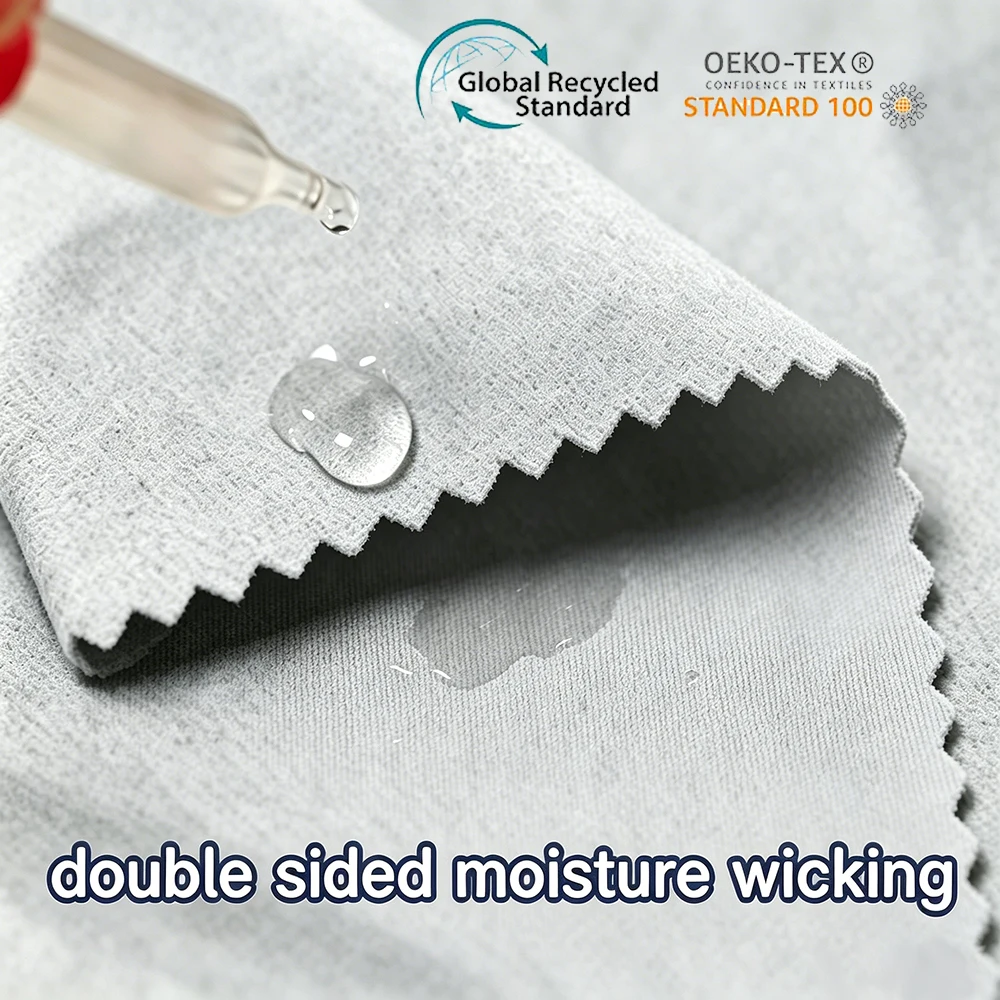
The first one:wingtex NS110 A double‑sided fabric with 220 grams per square meter, which is made up of 75 percent nylon and 25 percent spandex. It features a Lululemon‑like hand‑feel: soft, fine, smooth and skin‑friendly. If you aim to build your premium brand and cultivate a high‑end active‑lifestyle positioning, this fabric is a smart choice.
The second: PS109 A
230 gsm interlock fabric with 78% polyester and 22% spandex. It is functional, highly durable and cost‑effective. It works better for high‑intensity training wear and active sets subject to frequent use and washing.
Whichever fabric you select, you will receive our consistent high‑quality service. Every client is valued and treated with full attention. Feel free to contact us for color cards and samples should you be interested.