
What Are Synthetic Fibers? What Is the Difference Between Synthetic Fibers, Natural Fibers and Regenerated Fibers?
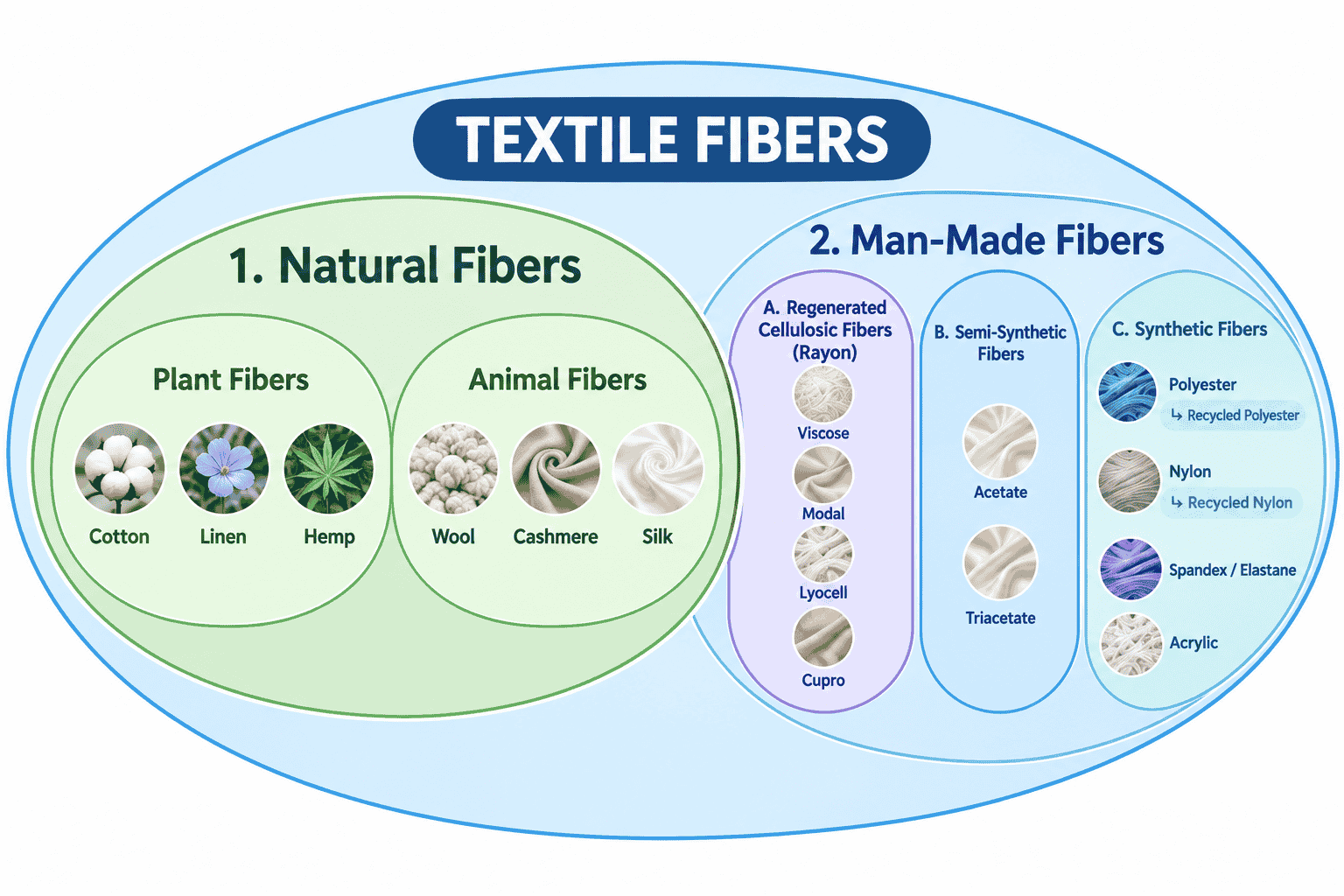
Simply put, synthetic fibers are textile fibers made by using petrochemical products as raw materials, conducting chemical polymerization reactions, then melt spinning.
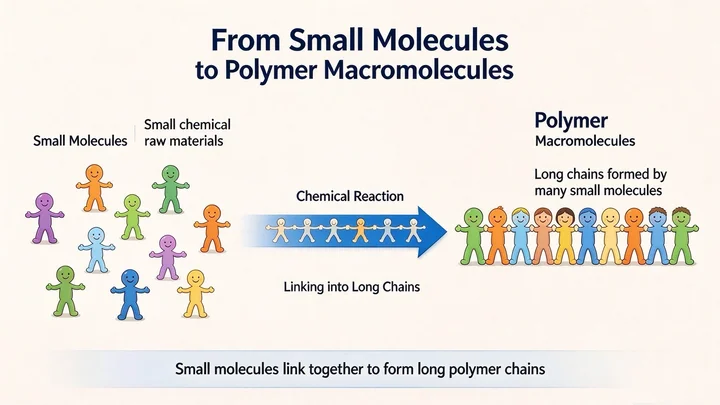
Synthetic Fibers are man‑made fibers. We make their polymer molecules from small chemical raw materials. These raw materials mainly come from petroleum. We use chemical reactions to connect small molecules into long polymer chains.. Their properties are not limited by natural raw materials.
We can manually adjust features such as wear resistance, elasticity and quick dry performance. Their main weakness is generally low moisture absorption. Nylon, polyester, spandex and acrylic all belong to synthetic fibers.
They are different from natural animal and plant fibers such as cotton, linen and wool that are taken directly from nature. They are also distinct from regenerated cellulose fibers like viscose, modal and lyocell which use wood as raw materials.
I.Why Are Synthetic Fibers So Common in the Modern Textile Industry?
Raw material supply is sufficient and production efficiency is high. Their performance can be manually controlled to achieve wear resistance, high elasticity, quick drying, wrinkle resistance and other characteristics hard to realize with natural fibers.
Meanwhile, recycled versions can be produced to meet the demand for eco friendly fabrics. They cover a wide cost range and fit mass production of garments and home textiles.
They are extracted from petroleum and do not rely on farmland resources like cotton. This helps ease the conflict of competing land use between cotton and grain, and satisfy clothing demands brought by the growing global population.
II. Common Types of Synthetic Fibers
1. Nylon (Polyamide)
Basic features of nylon:
Raw materials come from petrochemical cracking monomers, followed by polymerization and melt spinning. Mature recycled nylon is available on the market. It is produced by recycling old fishing nets, nylon offcuts and waste fabrics, then depolymerizing, purifying and re-spinning. Its performance is close to virgin nylon.
- Wear resistance: The best among these four synthetic fibers. It is not easy to break after repeated friction.
- Moisture absorption: Relatively high among common 4 synthetic fibers. It can absorb some moisture, yet still inferior to natural fibers such as cotton.
- Dyeing property: Easy to color. Dyeing can be done at room temperature or with slight heating, using acid dyes. The color is even and soft. Its shortcoming is poor color fastness of dark shades; colors tend to bleed and cross stain during washing.
- Chlorine resistance: Weak chlorine resistance. When exposed to chlorinated pool water for a long time, fiber strength gradually drops and fading happens more easily.
Application of nylon in sportswear, underwear and swimwear: Virgin nylon has fine, smooth and soft hand feel. It is widely used in next to skin sportswear, underwear, socks and casual swimwear. Pure nylon fabrics exist but are relatively rare. Most are blended with spandex to gain elasticity.
2. Polyester
Basic features of polyester:
It is produced by polymerization of ethylene glycol (HOCH₂CH₂OH)and terephthalic acid(TPA),then melting and spinning. It is the textile fiber with the highest global output. Recycled polyester is widely popular. It is made by crushing waste plastic bottles and old polyester fabrics, then melting and re spinning.
- Wear resistance: Good performance, overall weaker than nylon.
- Moisture absorption: Very low water absorption; barely absorb water.
- Dyeing property: Dyes can hardly penetrate into fiber interior at normal temperature. High temperature and pressure around 130℃ together with disperse dyes are required for dyeing. After dyeing, it boasts excellent color fastness and hardly fades during washing or sweating.
- Chlorine resistance: The fiber itself has good chlorine resistance. It is not easily damaged by chlorine under swimming pool conditions.
Application of polyester in sportswear, outdoor apparel and daily garments: Strong wrinkle resistance, not easy to deform after washing, and excellent dimensional stability. It barely absorbs moisture, which forms the basis of quick dry fabrics. It is massively used for quick dry sports fabric, outdoor jackets, home textiles and swimwear. It is blended with spandex when elasticity is needed.
3. Spandex (Elastane)
Basic features of spandex:
It is produced by polymerization and spinning of petroleum based polyurethane(PU) raw materials. There are almost no mature and widely circulated recycled spandex, as recycling and reprocessing are highly difficult.
- Wear resistance: The monofilament itself has poor wear resistance. It needs to be blended or wrapped with other fibers for use.( Click to see the 5 common types of spandex yarn)
- Moisture absorption: Very poor water absorption.
- Dyeing property: The fiber itself can hardly take color. During nylon spandex dyeing, acid dyes mainly color nylon. Spandex only gets slight surface staining, which easily fades and causes cross staining.
- Chlorine resistance: Spandex is the fiber most vulnerable to chlorine. Chlorine water will directly destroy its elasticity. This is the main reason swimwear becomes loose after long soaking.
Why does spandex have outstanding elasticity?
Its molecular chain has a special soft segment and hard segment structure. It can be stretched greatly. Once external force is removed, molecular chains rebound and restore to original shape. Therefore, large stretching and high elastic recovery can be achieved.
Application of spandex in yoga pants, tight sportswear, underwear and swimwear: It is only used as elastic additive, blended with nylon or polyester, for yoga pants, leggings, sports bras and swimwear to provide stretch and recovery.
What is the difference among Spandex, Elastane and Lycra?
Spandex is the American term, Elastane is the common European name. Both refer to the same fiber spandex. Lycra is a commercial brand name of spandex instead of a new fiber type.
4. Acrylic
Basic features of acrylic:
It is produced by polymerization and spinning of acrylonitrile monomer(CH2=CH-CN) refined from petroleum. Recycled acrylic is rare on the market without large scale mass production.
- Wear resistance: Average performance. It tends to pill under long time repeated friction.
- Moisture absorption: Very low water absorption; hardly absorbs water.
- Dyeing property: Easy to color, mostly using cationic dyes, with acid dyes adopted in some scenarios. Finished products have high color saturation and bright appearance.
- Chlorine resistance: Better than nylon and spandex with higher chemical stability.
Why does acrylic have wool like appearance, hand feel and warmth retention?
The fiber is crimped and fluffy, which can trap plenty of static air. Static air has low thermal conductivity and blocks body heat loss to realize heat preservation. It looks fluffy with visual and tactile feeling close to wool.
Application of acrylic in sweaters, knitwear and blankets: Mostly used for affordable sweaters, scarves, blankets and lining fleece of shoes. Its moisture absorption and heat resistance are not as good as real wool. It is often blended with wool or polyester to adjust hand feel and cost.
VII. How to Select Suitable Synthetic Fiber Fabrics According to Garment Purposes
1. Yoga Fabrics&leggings fabric
Difference between Nylon Spandex fabric and Polyester Spandex fabric:Nylon Spandex fabric features fine hand feel and close fit with good wear resistance; Polyester Spandex fabric has better deformation resistance and color fastness with a relatively dry hand feel.
Elasticity, recovery, hand feel and fitting performance:Elasticity level does not only depend on fiber blending ratio. Spandex quality and yarn technology determine rebound performance. Nylon style delivers softer touch while polyester style feels drier. Brushing finishing can make hand feel softer and fuzzier.
Relationship between fabric structure and wearing experience:Single jersey is lightweight and thin; double jersey is thick and stable. Weave pattern directly changes tightness and thickness.
2. Sports Bras and Regular Underwear fabric
Common combination of nylon and spandex: It is the mainstream match. Nylon ensures durability and support, and spandex achieves body curve fitting and rebound. Nylon brings soft touch and spandex provides elasticity. The blending ratio affects tightness. When used as underwear fabric, this combination can reduce breast shaking during high intensity movement. Thick double knit offers stronger support; thin single knit is more comfortable with weaker support.
3. Swim fabric
Nylon spandex fabric vs Polyester spandex fabric :Nylon Spandex fabric has soft hand feel, mostly used for casual swimwear; Polyester Spandex fabric features better chlorine resistance and is widely adopted for competitive training swimwear.
What is Chlorine Resistance?
As we all know, water in artificial swimming pools is generally disinfected by chlorine, so certain chloride ions remain in the water. Chlorine resistance refers to the fabric’s capability to resist erosion from pool chlorinated water, slow down fiber aging, elasticity loss and color fading.
How does chlorine in swimming pools affect swim fabric?
Chlorine mainly attacks spandex, damages elastic molecules and causes fabric slackening. Meanwhile it accelerates dye fading of nylon. The main body of polyester is barely affected by chlorine.
Why is chlorine resistance especially important for frequent swimmers and competitive swimwear fabrics?
Competitive swimwear fabrics are frequently used in swimming pools and continuously eroded by chlorine. Swimwear with poor chlorine resistance will quickly turn loose and fail.
How to select swimwear fabric based on swimming environment and usage frequency?
Occasional water activities: Nylon + Spandex fabric works well. Long term pool training: Prioritize chlorine modified polyester fabric.
4. Running Wear fabric and Training fabric
Polyester spandex fabric is the mainstream choice, with quick dry and anti deformation features. Spandex offers elasticity for movement. People pursuing soft and close fitting training clothes will pick nylon spandex fabric. Choose quick dry polyester for running with heavy sweating; nylon is suitable for low intensity close fitting training.
Fiber composition and fabric structure also affect wearing experience. Fiber composition is the foundation, while weave structures such as mesh and plain weave change breathability and moisture wicking effect.
VIII. Can Fiber Composition Determine All Properties of Fabric?
1. Fiber Composition: How Does Different Fiber Ratio Affect Fabric Performance?
For the same fiber type, different spandex ratios create obvious differences in elasticity and hand feel. But higher spandex percentage is not always better; spandex quality and fabric structure also matter.
2. Yarn Specification: How Do Yarn Count and Processing Method Influence Hand Feel and Performance?
With different yarn thickness, even if the composition is exactly the same, fabric thickness and touch will have big gaps.
3. Fabric Structure: What Is the Difference Between Single Jersey, Double Jersey and Other Structures?
Single jersey is lightweight and breathable; double jersey is thick and stable. Weave pattern directly decides stretch and supporting power.
4. Finishing Process: How Do Brushing, Printing and Other Processes Change Surface Texture?
Brushing can turn dry polyester soft; printing changes surface touch. Some finishing treatments can improve moisture absorption and anti static performance.
5. Why Can Fabrics with Identical Composition Have Totally Different Hand Feel and Usage?
Fiber blending ratio, yarn, weave pattern and finishing jointly decide fabric performance. Composition is only one part of all factors.
IX. Common Questions About Synthetic Fibers
- Is nylon better than polyester?
There is no absolute good or bad. Nylon has good wear resistance and soft hand feel. Polyester features wrinkle resistance, quick drying and high color fastness. They fit different scenarios. - Does polyester have higher elasticity than nylon?
Both have ordinary elasticity in virgin status. Adding spandex is required for strong rebound for both. - Can nylon and polyester be blended?
Yes. Blending combines advantages of both. The final effect depends on blending ratio and other technology.